Sakshya112 is India's anti-crime response network in development — a citizen app that reaches the police when you can't, two advanced drones for outdoor and indoor operations, and docking stations across the city: built to de-escalate, negotiate and prevent.
When calling the police isn't possible, Sakshya112 gives you two silent ways to reach them. Shake your phone — or say the emergency word, "Help" or "Call the police," in any Indian language — and a live video call opens to the police control room, recording from the first second.
Every feature is designed for moments when speaking aloud isn't safe: discreet text chat with the control room, live audio and video sharing, an AI summariser that briefs responders on the situation as it unfolds, and real-time translation so the control room understands every caller in their own language.
And because safety is a family concern, the app carries a Guardian Circle — trusted contacts, shared journeys with check-ins, and a quiet "reached safely" — protection that works all day, not only in the worst minute. Every second it records is hashed at capture, so what the phone saw survives as court-ready evidence.
Type silently to the control room when a voice would give you away.
The control room sees what your phone sees, from the first second.
Responders get a running brief of the situation as it unfolds.
The control room understands every caller in their own language.
Shake the phone or say the word — a cancelable countdown absorbs false alarms.
Trusted contacts, shared journeys and check-ins — nothing escalates without you.
Every second hashed and sealed on the phone, built around India's evidence law.
No signal? It keeps recording locally and uploads the sealed chunks when signal returns.
Listening for the emergency word happens on your phone — nothing is recorded or streamed until you trigger it. No unlocking, no dialling, no app to find. The response begins while the phone is still in your pocket.
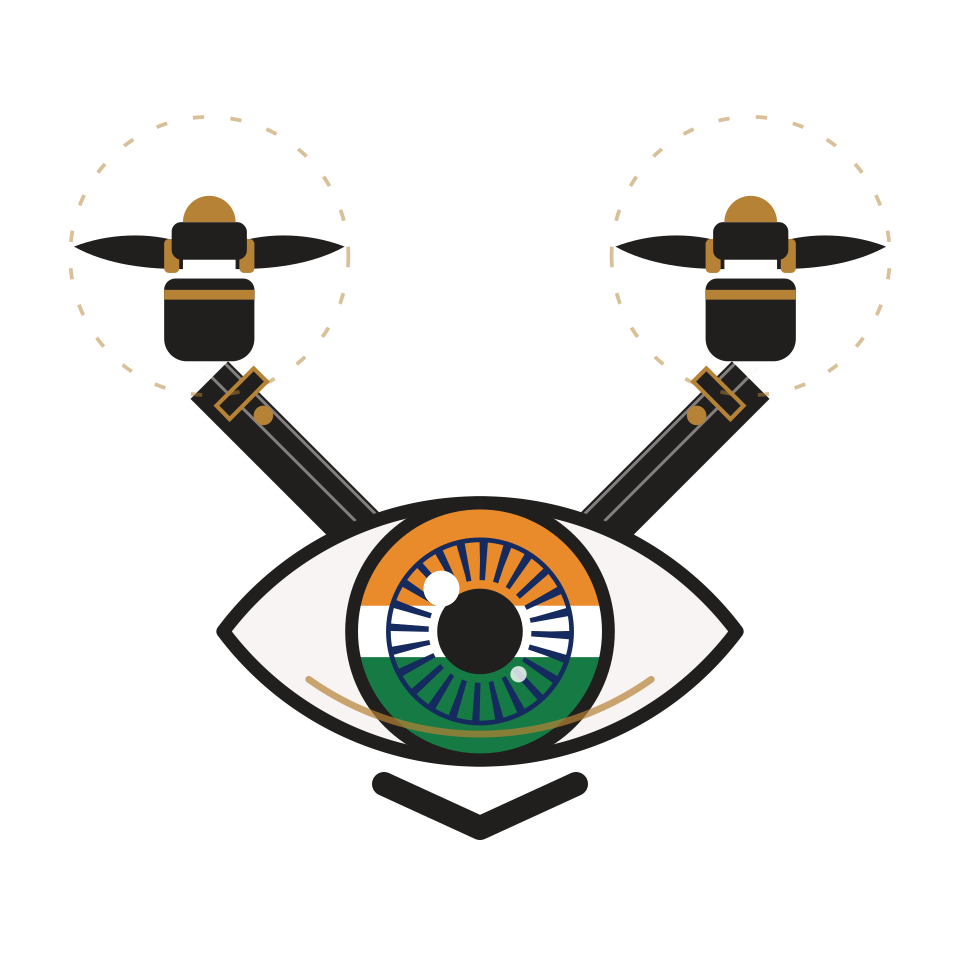
Two advanced drones and a city dock network, in development for crime de-escalation, negotiation and prevention — VEER outdoors, NAYAK indoors, and RAKSHAK, the docking stations they launch from. Police eyes on the scene, a voice in the air, and officers guided in before anything goes wrong.
The responder. Launches from a RAKSHAK dock and reaches the scene first — a presence in the air that announces police are watching.
The indoor specialist. A caged micro-drone that goes where officers can't yet see — corridors, stairwells, rooms — and talks while it looks.
VEER's home across the city — charged, climate-controlled and ready day and night. The network that makes 120 seconds possible.
Every figure above is a design target — nothing here has been built, flown or certified yet. All flights happen within visual line of sight under a licensed human pilot in command; we do not conduct, offer or advertise BVLOS operations. A licensed pilot flies every drone — software never flies the aircraft.
In dense city traffic, road response to an emergency can take 10–15 minutes. A crime takes seconds.
That gap is the reason we are building eyes that fly — a design target to be proven in independent flight testing before any pilot city.
Walking home late.
The cab that turns wrong.
The knock that doesn't stop.
A night shift, alone.
Every parent's 2 a.m. worry.
For everyone who was told "stay safe" — and deserved more.